Best things to see in Bydgoszcz: One Day Itinerary

Some posts on this website contain affiliate links. I receive a small commission if you use the links at no extra cost to you.
Bydgoszcz city is not a very well-known travel destination, even among Polish tourists. However, this has been changing recently. And after visiting Bydgoszcz, many people are surprised that it would be so nice.
So what are the best things to do and see in Bydgoszcz, Poland? Let me take you for a walk. In this article, and I’ll show you the best places in Bydgoszcz’s centre to see in one day.
It will be a bit special walk and post, as originally, I come from Bydgoszcz. I grew up and lived there until I finished high school. I don’t live there anymore for years now, but when visiting my family at present, I sometimes spend ‘a tourist in my own city’ day. It’s nice to see how the city has changed, how vibrant it is (especially in the spring and summer months), and that more and more tourists appreciate it.
I can’t promise you that this blog post will be fully objective, but Bydgoszcz is really a great destination for, for example, a short weekend break.
The route that I’m describing is around 2-3 hours of pure walk, however with breaks, attractions, museums’ visit and coffee breaks it’s perfect one day itinerary.
What to expect from Bydgoszcz
Bydgoszcz lies in northern Poland, in the Kuyavian-Pomeranian Voivodeship. It’s one of the biggest cities in Poland (8th). It lies exactly ‘in the middle’ between Gdańsk and Poznań.
Bydgoszcz has its own airport. Bydgoszcz Ignacy Jan Paderewski Airport is located in Szwederowo district, and it has flight connections mostly to the UK and Ireland.
In this blog post, you can read more details about airport, getting to Bydgoszcz, etc.
Bydgoszcz lies on the Brda River, there is also the Vistula River passing through the city.
It’s one of the reasons of why you should visit the city, here I’ve tried to explain it better.
Generally, it’s a city on the water. That’s why I would recommend visiting it during the warm months, in spring and summer, when you could partially visit by water tram. However, Bydgoszcz also looks nice in autumn colours, which fit the architecture.
The city has a rich history and interesting museums. And quite many green spaces.
Shall we walk?
Best things to see in Bydgoszcz: Start at Kochanowki Park
You can of course start the day close to Old Market Square, which is described in this post below. But I wanted to take you firstly to less known part of the city centre.
The Music District
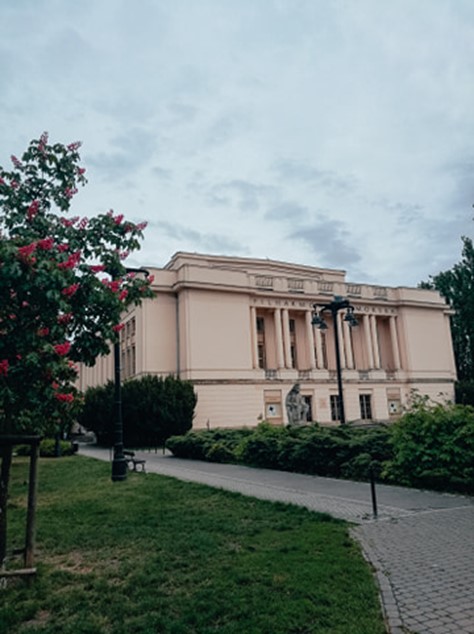
So for me, the best idea is to start the walk in the Music District. You will find there the Philharmonic and the Academy of Music, a theatre, and a beautiful Jan Kochanowski Park with sculptures of composers.
In the park, you will also find a sculpture of the Archer Lady, which is the city symbol (a sculpture’s author is Ferdinand Lepcke, who also created four copies of the sculpture, one of which is in a museum in Berlin).
The Pomeranian Philharmonic Hall opened in 1958 and is known worldwide for its excellent acoustics.
In front of the concert hall, there is quite a new tourist attraction: a fountain working to the rhythm of music.
The district is a green place, and it is so peaceful. You can often hear students playing through the windows of the pretty buildings of Musical University.
Cieszkowskiego street
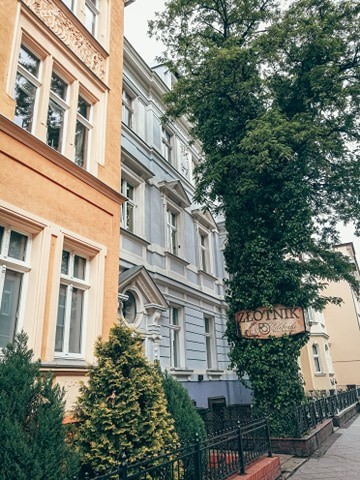
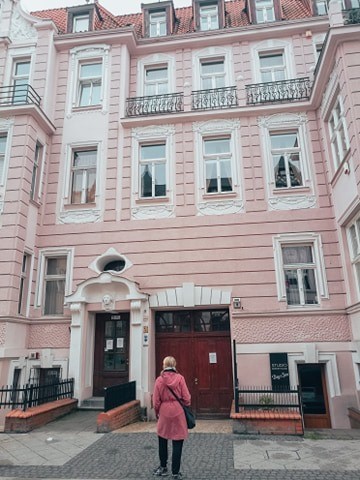
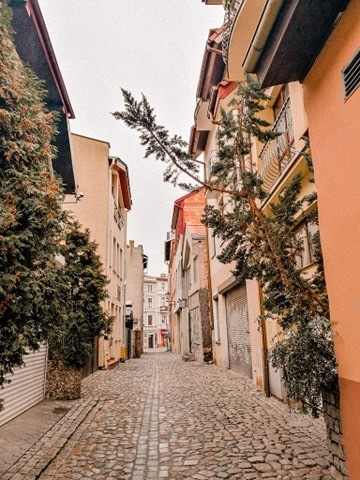
From there, you are only a few steps away from another attraction, Cieszkowskiego Street. Before, despite historic architecture, it did not evoke such good emotions. But since the renovation was completed in 2017, you have to check it out. This is one of the prettiest streets in the city. With colourful tenement houses (from the end of the 19th and the beginning of the 20th centuries), with elements of Art Nouveau, Neo-Baroque, and Neo-Gothic. There are trees, neat signboards, benches, and stylish lanterns to complete the look of the street.
Deluge Fountain
Now, we are going down Gdańska Street, heading towards the Old Town. With a few stops.
Along the way, it is worth paying attention to the beautiful tenements built between 1880 and 1914, as some of them appear in the register of monuments.
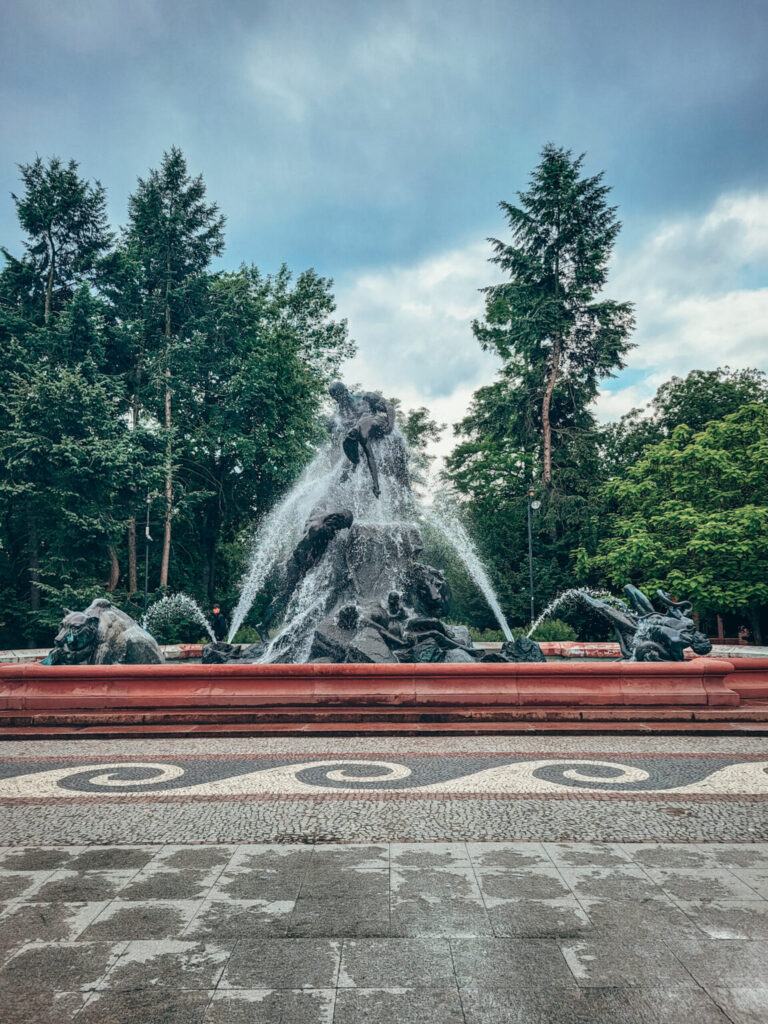
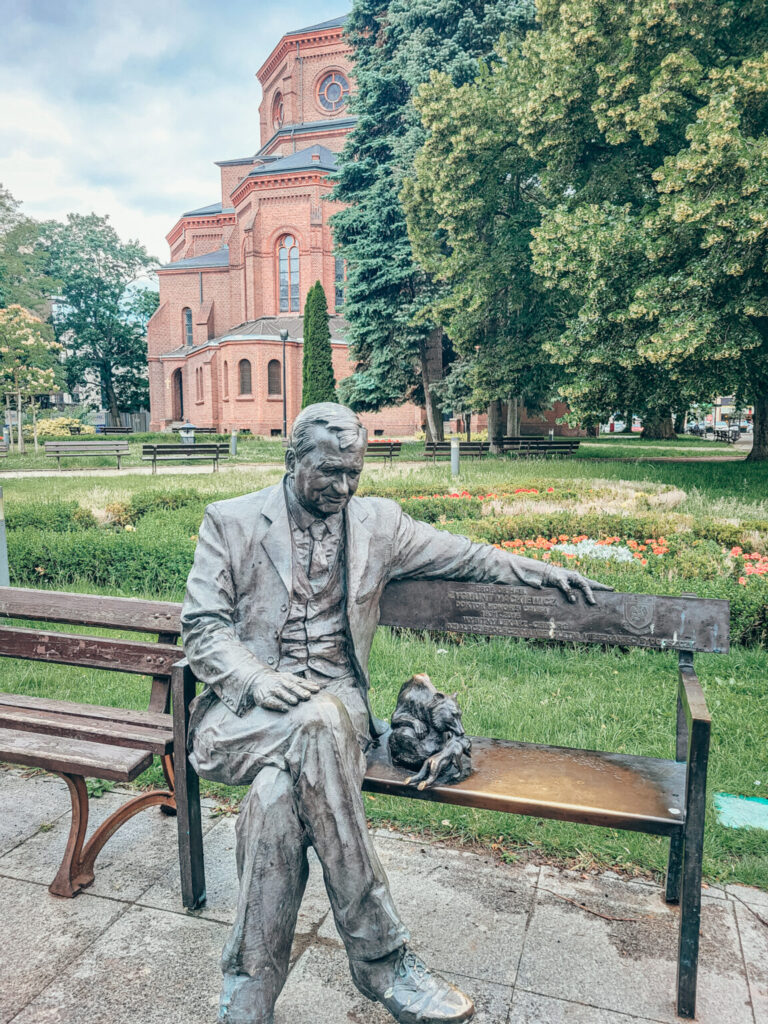
At Plac Wolności (you can easily recognise it by the monument), turn left to see the tenement houses and walk through the Kazimierza Wielkiego Park. You will find there the Deluge fountain sculpture, also created by F. Lepcke. The fountain was created in 1904, and in 1943 it was confiscated by the Germans for war purposes. The fountain was reconstructed thanks to a social committee, and the ceremonial unveiling took place in 2014. Profesor Mackiewicz, famous surgeon, was the committee chairman, and that’s why you can find his statue on the bench next to the fountain.
Gdańska Street
From the park, it’s best to get back to Gdańska Street along Parkowa Street. On the left, you can see an interesting mural and alley by the iconic club Mózg.
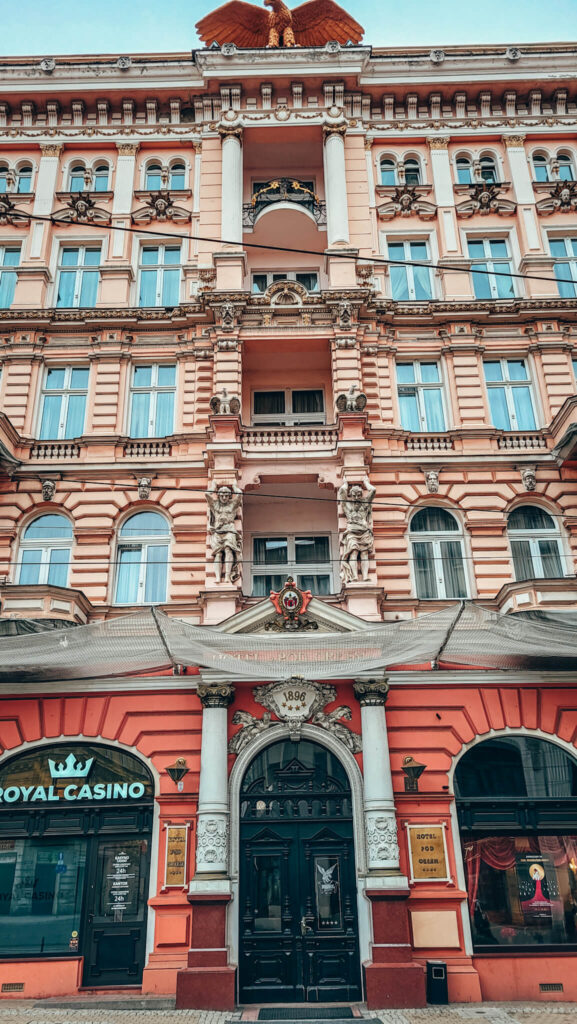
After returning to the main street, we will head “down”, but first look around. And look up too, because you will be at the Hotel Pod Orłem. The place and hotel have an interesting history (there was an inn here at the beginning of the 19th century), and the current building designed by Józef Święcicki was built in 1894-1896.
A few steps from there, you will see Bromberg Café, a café with good coffee and a great interior. Step by, if you need a break.
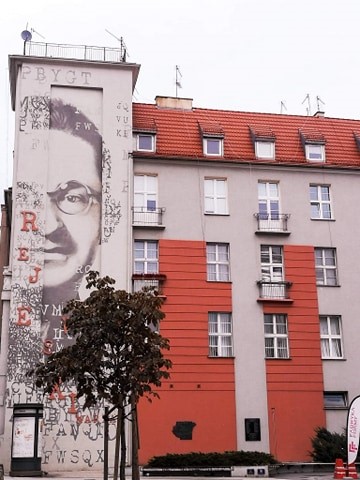
Moving towards the market square, you will also pass the Church of the Poor Clares and the mural dedicated to Marian Rejewski (you have to look back). You probably also passed a bench dedicated to him before (he was from Bydgoszcz). He was the famous cryptologist who broke the Enigma code.
Things to do in Bydgoszcz: Around the Brda River
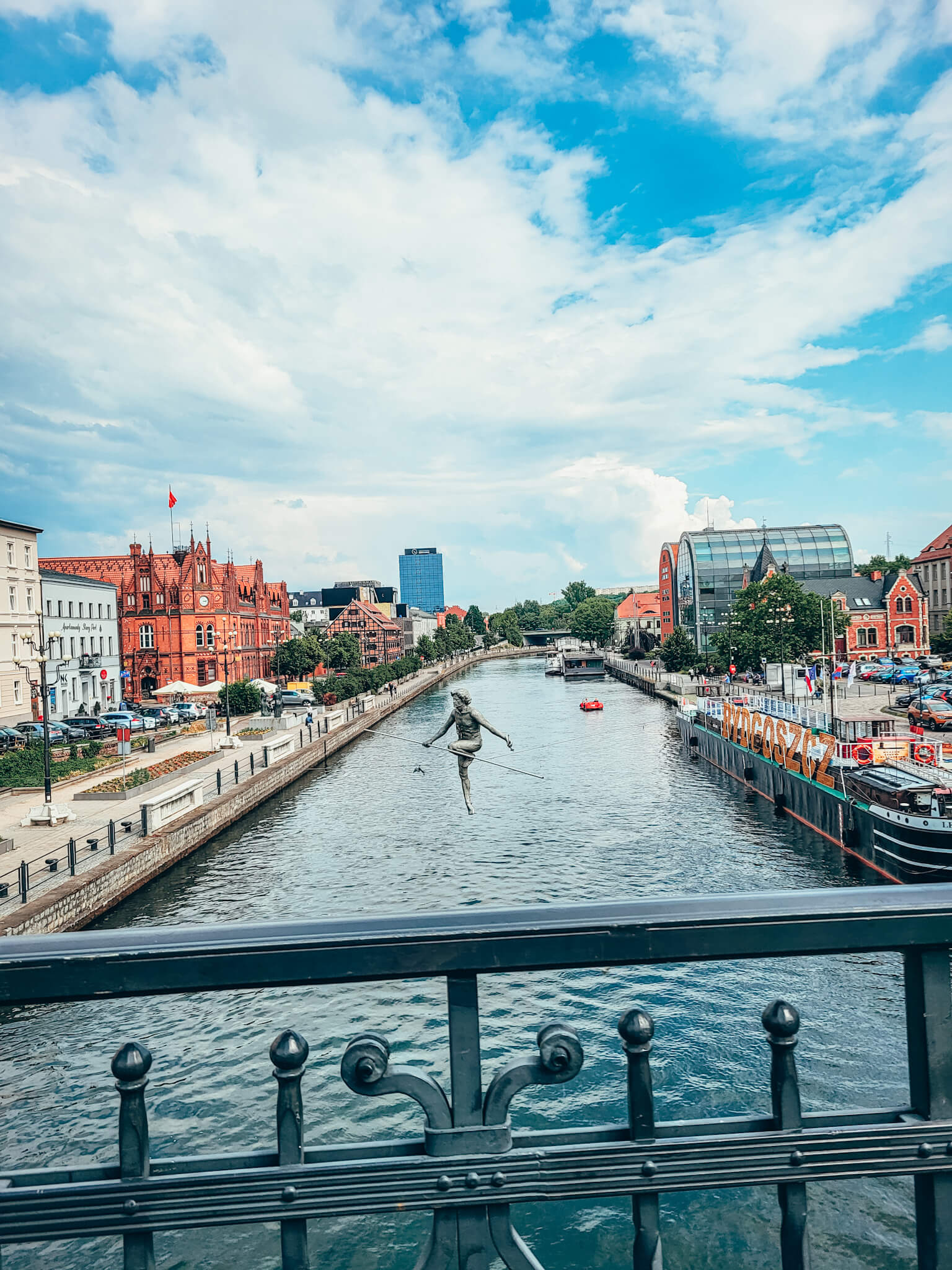
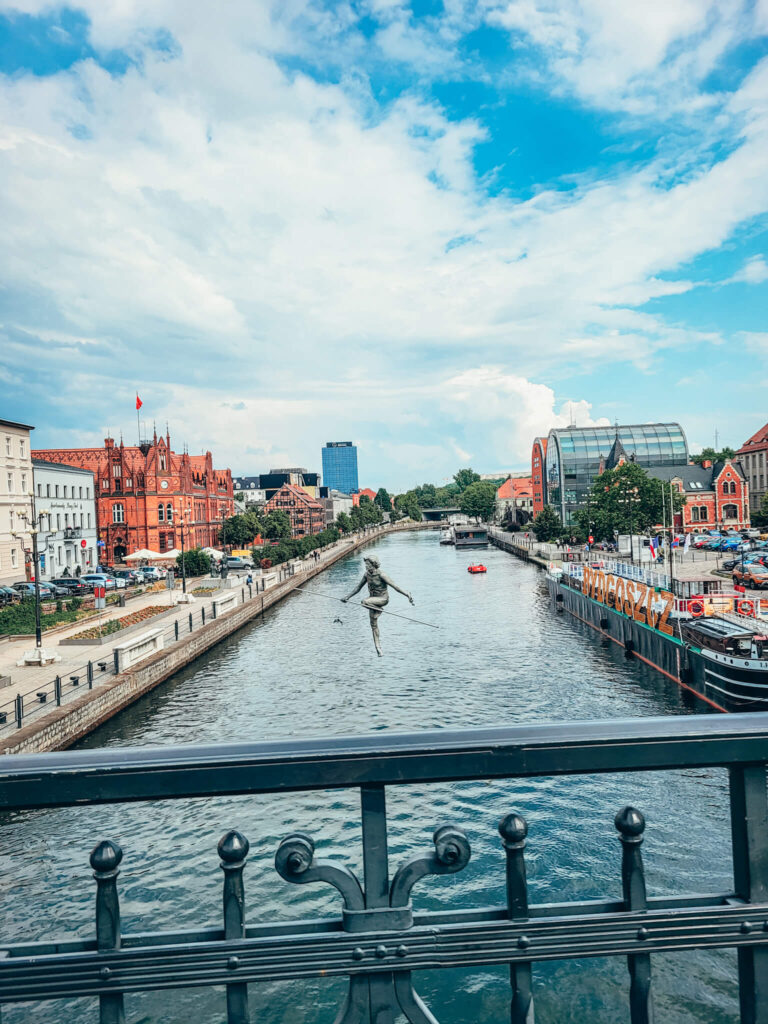
We arrived at the Brda river, which is the heart of the city and a place mostly associated with Bydgoszcz.
The bridge on which you will probably stop to take some pictures is a bridge named after Jerzy Sulima-Kamiński, writer, radio journalist, and author of the book ‘The Queen Jadwiga’s Bridge’.
It is not very popular among readers outside the city, but it is worth it. A family saga about everyday life in interwar Poland and during the war (from the 1930s to 1956), with the city in the background and in an interesting language, the dialect from the region.
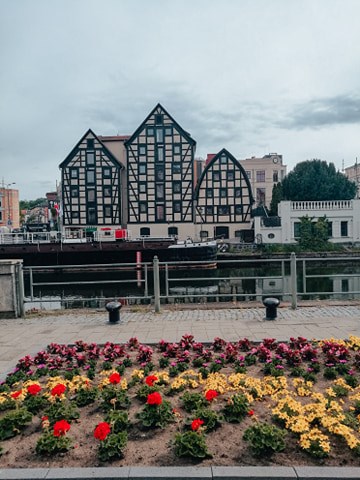
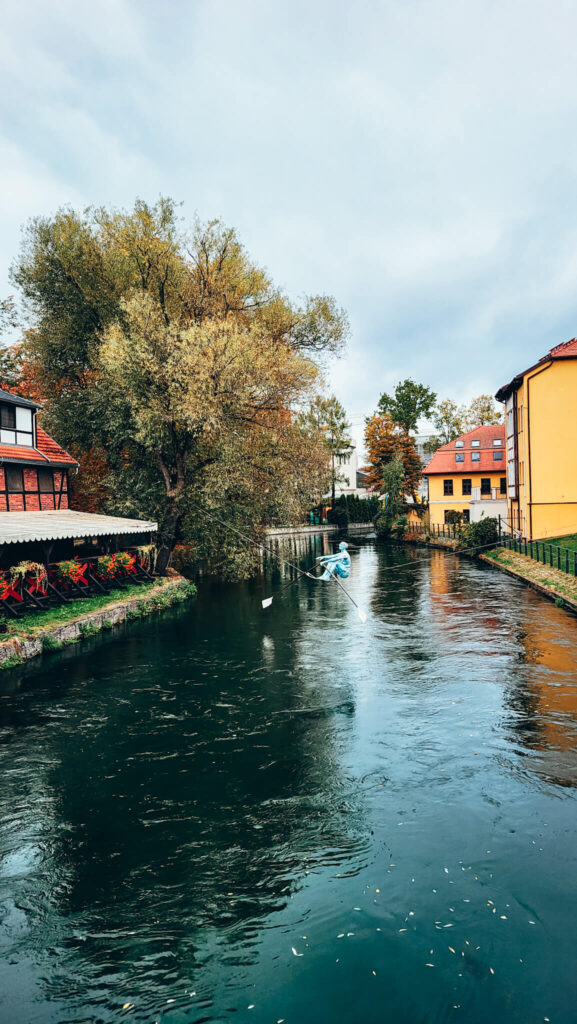
Above the river hangs ‘Man Crossing the River’, a sculpture unveiled on May 1, 2004, to commemorate Poland’s accession to the European Union. Back then, it was said that it was the first such sculpture in Europe. You also see the building of the Main Post Office, new granaries, and antique granaries (built in 18/19th centuries), another symbol of the city. There is a branch of the museum with an interactive exhibition on the city’s history during interwar times; I recommend it!
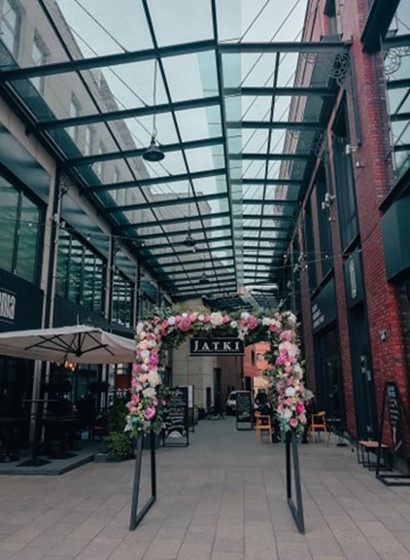
Ah, and when it comes to ‘hanging sculptures’ watch out, as you will be able to see more of them. One is also available on the Mill’s Island, another one in Jatki Street.
Around Old Market Square in Bydgoszcz
Heading towards the market, you pass a famous in country chain cake shop Sowa (which comes originally from Bydgoszcz). It is also worth turning left onto Jatki Street. The street returned to the map after almost 50 years of absence and is now the city’s culinary centre.
You are on the Old Market Square (Stary Rynek). It’s a charming square, with tenement houses, pubs, and the beautiful building of the city library. There is also a Town Hall, monument, and Gothic cathedral near the market square. Go inside the cathedral. It is a church built in the years 1466-1502, with preserved Rococo furnishings and quite strong colours in interior, which I honestly do not like.
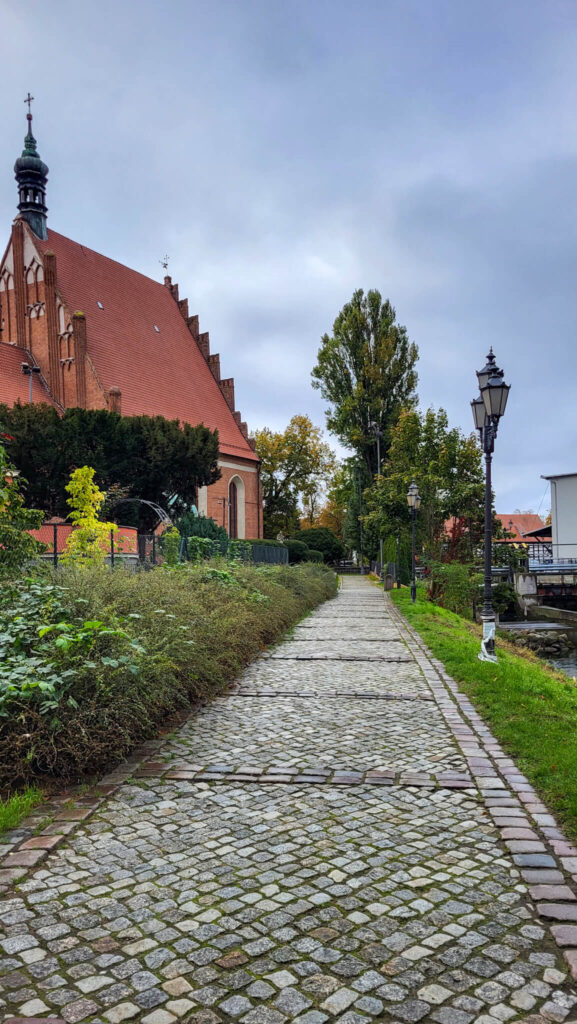
It is also worth taking a look and walk behind the cathedral. There is the Farny Weir (i.e. hydro- technical construction) from 1899. During its last reconstruction, a mountain canoeing course was opened there. The weir is part of the Bydgoszcz Water Junction, which is worth reading about here.
Before World War II, there was also a church on the market square, which got demolished during the war. According to legend, it was destroyed by German occupiers due to the non-disappearing bloody trace of the hand of one of the victims of terror.
On the Square, you will find the line of 18th meridian, which ‘connects’ Bydgoszcz with Stockholm and Cape Town.
Długa street
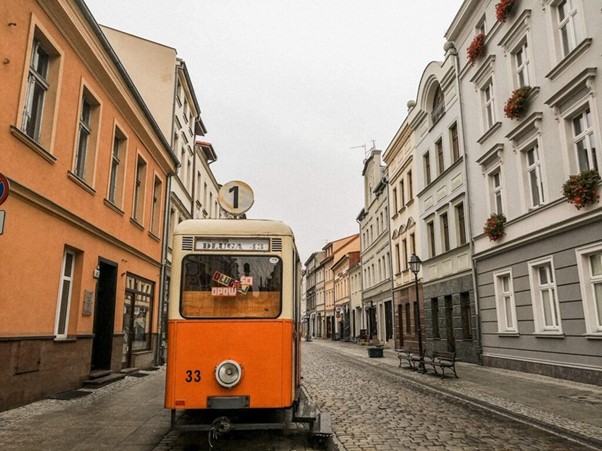
From the market, we go towards Długa Street, by Jana Kazimierza Street. Along the way, also look at the passing small street, Zaułek. Do you see the old tram? You are on Długa Street. The tram dates from 1955 and is a seasonal tourist information point. In the past, two tram lines ran along this street.
Walk along Aleja Bydgoskich Autografów (Autographs Alley), which reflects the signatures of people distinguished for the city.
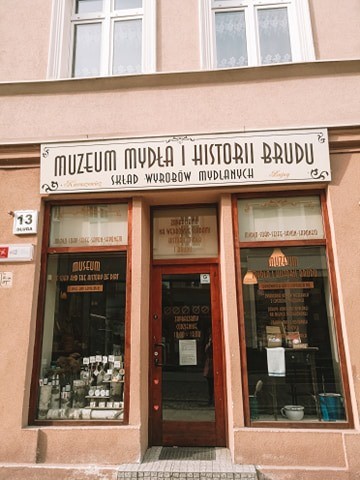
On Długa, you will also find tenements and pubs, as well as the Museum of Soap and History of Dirt. Don’t miss it; be sure to come; it’s very unique museum and the only such museum in Europe! You can make your own soap during the visit and learn about the history of hygiene.
Bydgoszcz in one day: Mill Island (Wyspa Młyńska)
We go along Długa Street up to the small stairs leading down. ‘Magic Stairs’ are named so because they “played” in the film ‘Magic Tree’ by Andrzej Maleszka.
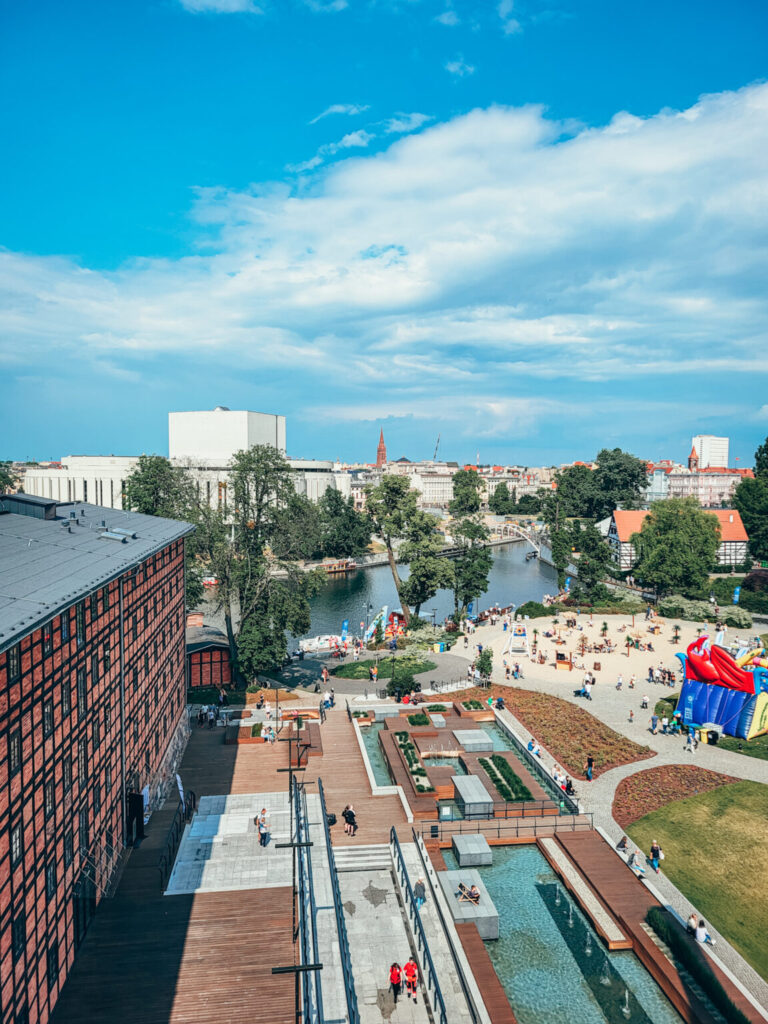
You are going down, and, welcome to Mill Island! A place where you can spend a lot of time. Take a walk, sit, eat, drink, and visit museums. It is also worth noting that this is not an island only in name but real island; bridges lead to it on each side, also from the Old Market (it’s another way to enter there from your walk, also pretty one).
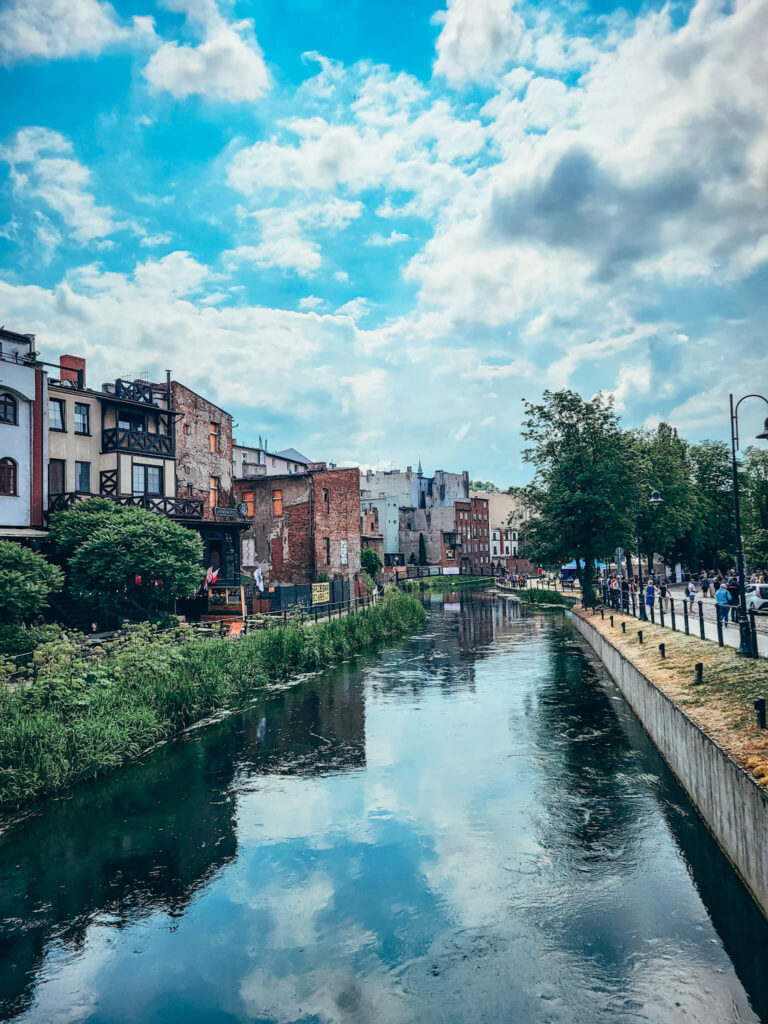
Some years ago, this area of the Mill Island looked quite different; there were only buildings and grass, and it was a place for summer Friday youth meetings. Now it’s safe, green and beautifully revitalised area. For me, it is a really pretty and quite unique place. Tenement houses by the canal are called ‘Bydgoszcz Venice’. There is also a marina, a hotel, and a water tram stop.
Every June, nice festival Ster na Bydgoszcz takes place on the Island.
Cruises
On Mill Island, you can rent a kayak or water bike. There are also water trams cruises which take you along the canal. They start at Rybi Rynek (not at Island), and there are two routes: Staromiejska and Słoneczna. In Staromiejska route, you can see working locks.
Check them out here.
Museums
There are also different museums on the Island: Regional Museum with different parts, for example Wyczółkowski’s Home or European Money Centre.
Rother’s Mills
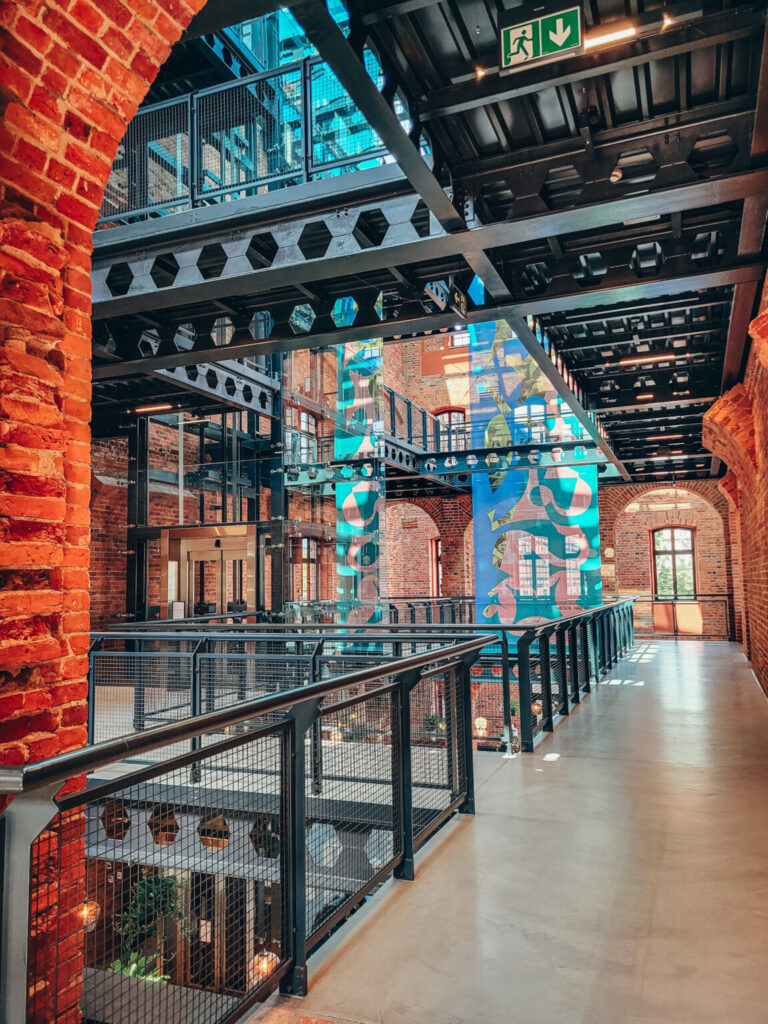
On Mill Island, you can also find Rother’s Mills. It’s an industrial monument from the 19th century where flour was produced. It has been recently renovated, and it now works as a Culture Centre. The interior is really interesting, and there is also a free observation deck and cafe. More about it you can read here and under this link.
On the other side of the river, you can see the Opera House (Opera Nova). Every year in May, the well-known Bydgoszcz Opera Festival takes place here. Near the opera house is an amphitheatre. In the summer, concerts from the River Music series take place here, and sometimes a boat is used as a stage.
You can reach the Opera House via Jan Kiepura Bridge (also called the Bridge of Lovers). In front of the building is a sculpture of Archer Nova.
This is the end of our walk and the top attractions in the centre. However, there is still more to see in the city.
Other attractions in Bydgoszcz
If you still have more time, you can also walk towards the main train stations and have a look at tenements around there.
From other places, look especially at:
- Exploseum Museum,
- Water Tower, and Waterworks Museum,
- Fordon district with memorial place ‘Valley of Death’
- Myślęcinek (Forest Park of Culture and Rest), which is the largest urban park in Poland. It contains a botanical garden, a ZOO and small lakes. If you are in Bydgoszcz for longer, you should also visit it, it’s a good place to relax.
See where to stay in Bydgoszcz in this post.
Welcome to Bydgoszcz!
