Easter in Poland: Traditions, Celebration and Food

Some posts on this website contain affiliate links. I receive a small commission if you use the links at no extra cost to you.
Easter is quite an important time in many European countries. In Poland as well. Let me tell you about Polish Easter traditions, celebrations and food.
Easter time
In opposition to Christmas, Easter is a moveable feast. Its date is connected to the religion and tradition, and it’s determined by lunar cycles. This approach was set in 325 AD by the Council of Nicaea: Easter takes place on the first Sunday after the first full moon in spring.
So Easter will always be on a Sunday and Monday between 22nd March and 25th April.
Of course, we are talking about the Western church. There are a few countries in Europe that celebrate Easter according to the Orthodox calendar (for example, Greece or Romania), and Easter (Pascha) is usually later there.
Anyway, Poland has strong Catholic traditions, and many celebrations around this time are very much connected to the religion.
That’s why not all the people celebrate Easter time in the same way, or celebrate at all. It very much depends on your private preference, approach to religion, etc.
In the post, I describe these ‘most standard’ traditions, but obviously don’t take it for granted that ‘everyone does it’.
Well, personally, I don’t do many of these things, either.
But it still doesn’t disturb me to talk about all the traditions. Let’s get into the details.
One week before: Palm Sunday
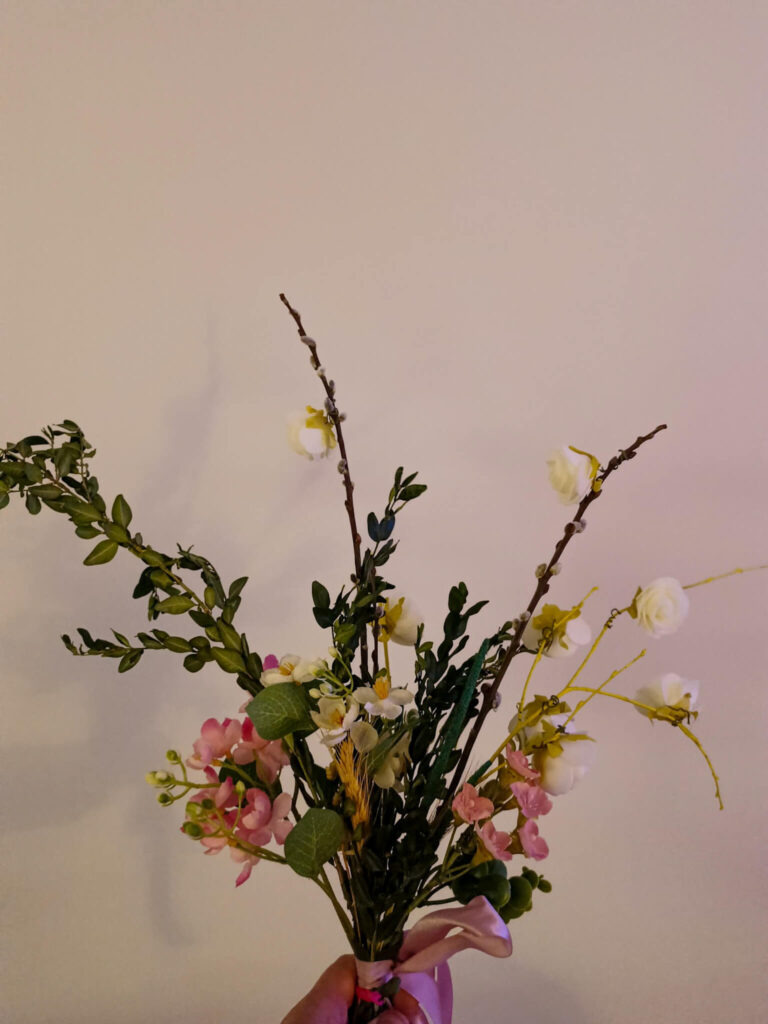
The Sunday a week before Easter in Poland is called Niedziela Palmowa, Palm Sunday. It commemorates Jesus Christ’s entry to Jerusalem, where he was welcomed with waving palm branches. Nowadays, on this day, people go to church with palms. They look different, though, not as typical palm leaves but as sticks with different flowers and decorations on them. In some places, especially villages, the tradition of creating big long palms and presenting them later during parades or competitions, is still alive.
One of the most known palm competitions in Poland takes place in Lipnica Murowana, not so far from Cracow. If you happen to be around at this time, it might be quite interesting to see.
Holy Week
The next days after Sunday are just normal working days, but you can feel the atmosphere of preparations in the shops, restaurants and bakeries that offer traditional products or catering (we will come back to the traditional food later on). At the moment, even Friday is a normal working day in Poland, although there are talks to change it (as in many other European countries, it is a day off).
Thursday and Friday are important from the religious perspective and there are celebrations in churches. Especially Friday, when there are the Ways of the Cross taking place. They quite often take place also outside the church; you can see them on the streets around churches or even more ‘in the centres’. Although, don’t expect such big events, as for example in Spain. Part of the people feast during the Good Friday, especially by not eating meat, but again -it’s very personal.
Saturday is the day ‘between’ preparations and celebrations. The most important tradition of the day is going to church, where they bless the Easter baskets.
The basket is nicely decorated, usually covered with a pretty table napkin or serviette. Inside, you will find small samples of food: colourful Easter eggs, sausage, pieces of cake, usually babka cake, butter, very often shaped like bunny; and bread. After food is blessed, it’s shared and eaten on Sunday morning.
Easter weekend
Easter Sunday
Sunday is the day of the happy celebration since the morning. It starts with elegant Easter breakfast that continues until late in the afternoon. It’s very family-celebrated.
Breakfast is huge, with a lot of traditional dishes, warm food, cold cuts, and cakes.
Sunday is also about the presents: mostly for children, and usually smaller ones like sweets. It depends on the region and family itself, but quite often presents are brought by the Easter bunny and hidden somewhere to be searched for.
For part of the people, Sunday is obviously also church day, and some go to church very early for morning service called Resurrection.
Easter Monday
Easter Monday is a little less ‘formal’, but it’s again a day with family celebration and a lot of food. People often meet for lunches or coffees on this day.
It also has one more tradition: Śmigus-Dyngus, Dyngus Day, called also Lany Poniedziałek, probably the best translation here is just Wet Monday.
In short, people splash water on each other. It has roots in old Slavic traditions. At the moment, it’s just great fun, if done in a reasonable way, especially for kids, if the weather is warm.
Easter Decorations
Easter is very attached to the beginning of the spring. I have to say that in past years we didn’t have much luck when it came to the weather; sometimes it was colder than during Christmas!
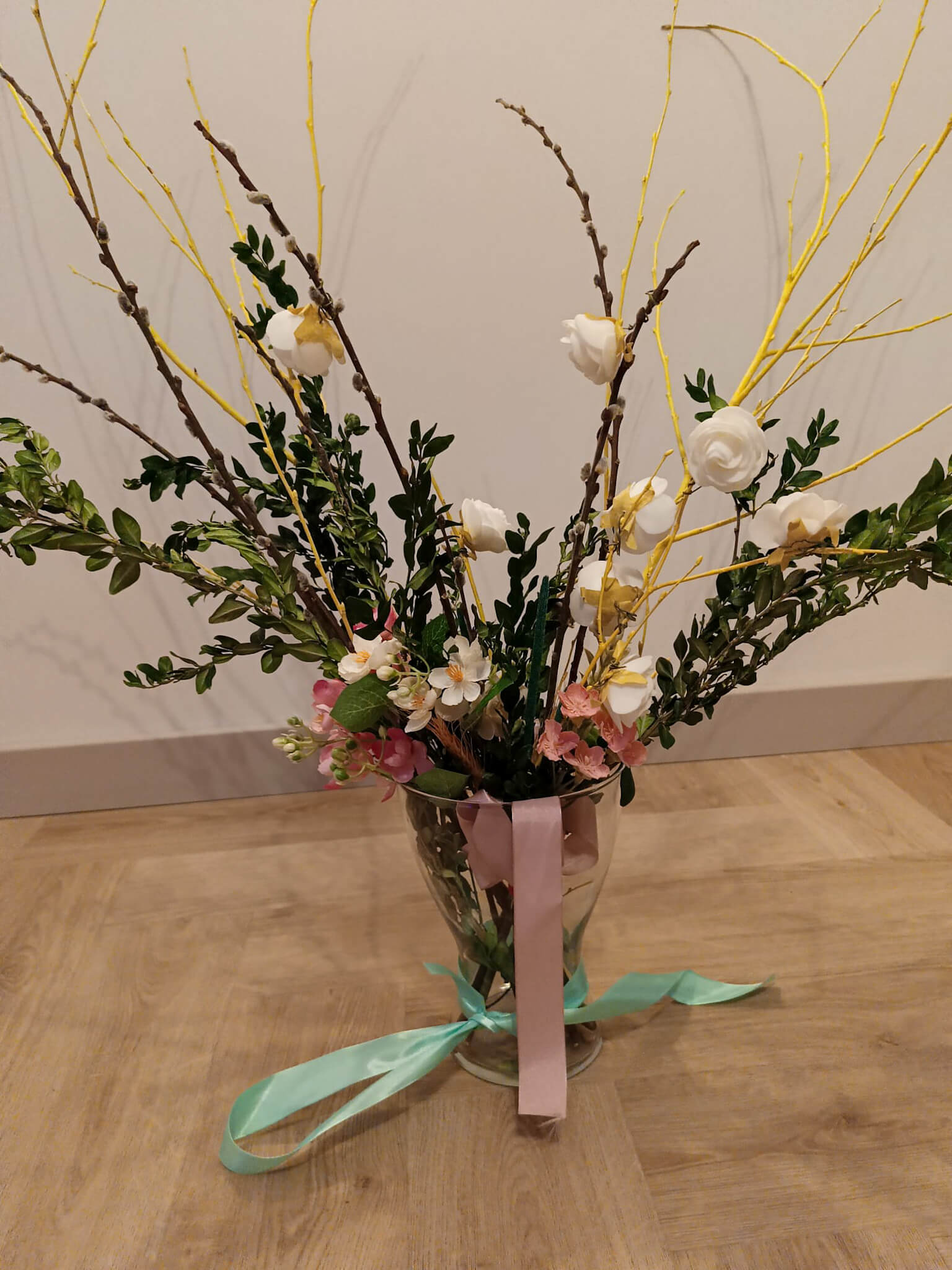
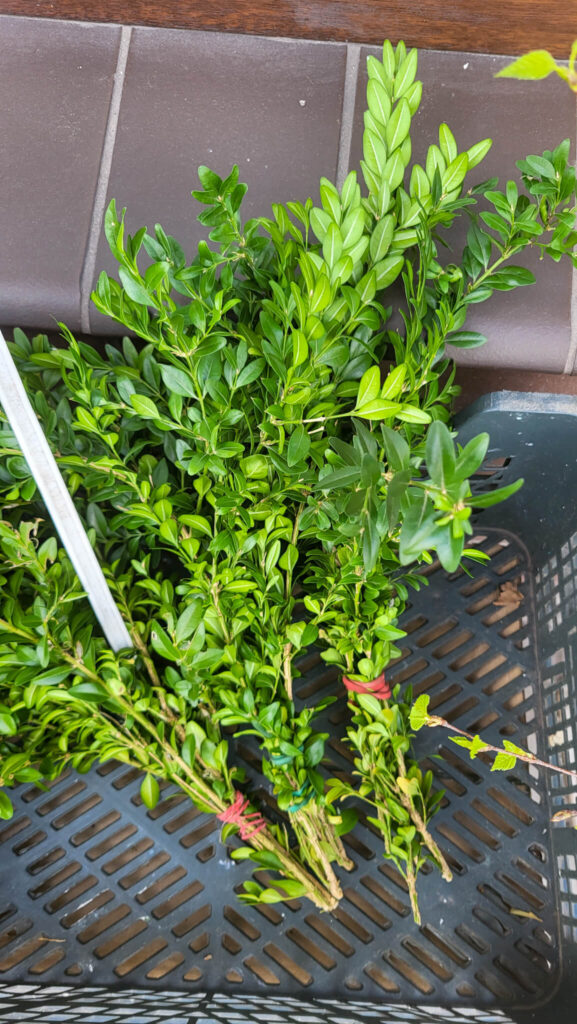
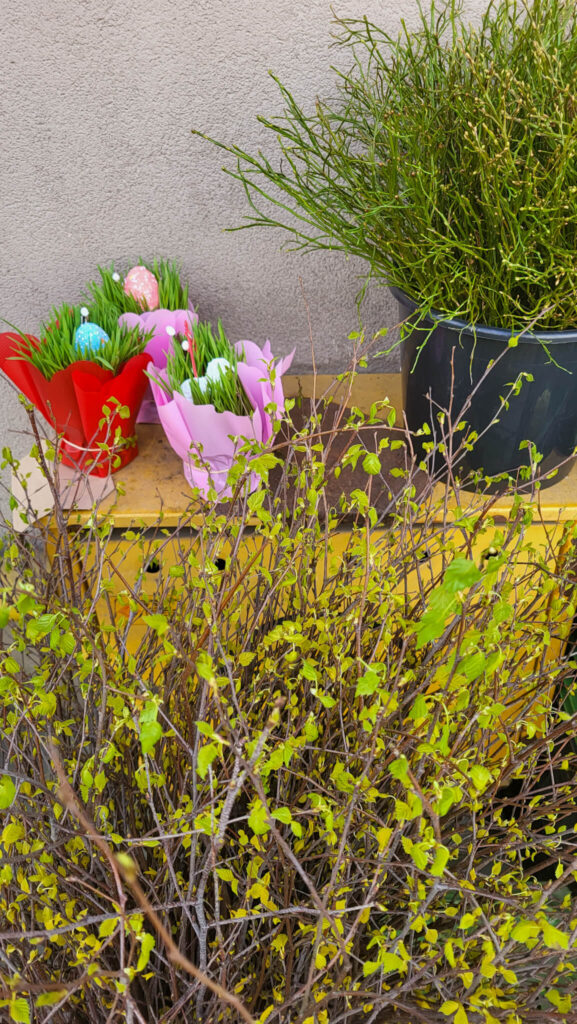
But decorations catch up with the spring feeling. Tables and homes will be usually decorated with twigs with green leaves, boxwood, yellow forsythia and catkins.
You can also see flowers and freshly grown cress, which people would plant a few days earlier.
A lot of decorations will also touch on the typical Easter topics like Easter eggs, bunnies, or chickens.
Easter eggs, with their colourful or artistic outside are often homemade. You can also buy handmade craft eggs, painted or scratched, on Easter fairs.
Traditional Easter food in Poland
There are quite many traditional dishes for Easter in Poland:
Savoury and main dishes
Easter eggs, especially just-cooked ones, are served often with mayonnaise.
In my region, we also eat stuffed eggs. The recipe is simple: cook eggs and cut them in half, still in the shell. Cut eggs (without shell) in very small cubes, mix with spices, chives and a little bit of mayonnaise and bread crumbs. Put it back into the shelf of egg, cover with bread crumbs and fry for a moment on the pan. It’s great; check it out:)
White sausage, which can be cooked or baked with some additions. The best is to eat it with horseradish.
Pasztet, meaning pate. Traditional one from liver, but my mum bakes also great vegetable pate.
Vegetable salad, something like ensalada rusa in Spain. Anyway, each family has its own recipe, but the basic is cooked vegetables: potatoes, carrot, and parsley. With eggs, onions, apple, and mayonnaise.
Żurek, so sour rye soup, with sausage and egg. One of the most traditional Polish soups, which you can eat all year round, but it’s also often served during Easter.
Different baked meats, cold cuts, hams, and sausages.
Butter is often served in the shape of a bunny or sheep.
Sweets
The most traditional cakes during Easter:
Cheesecake, different types, but cheesecake is one of the most traditional cakes in Poland, eaten during Easter.
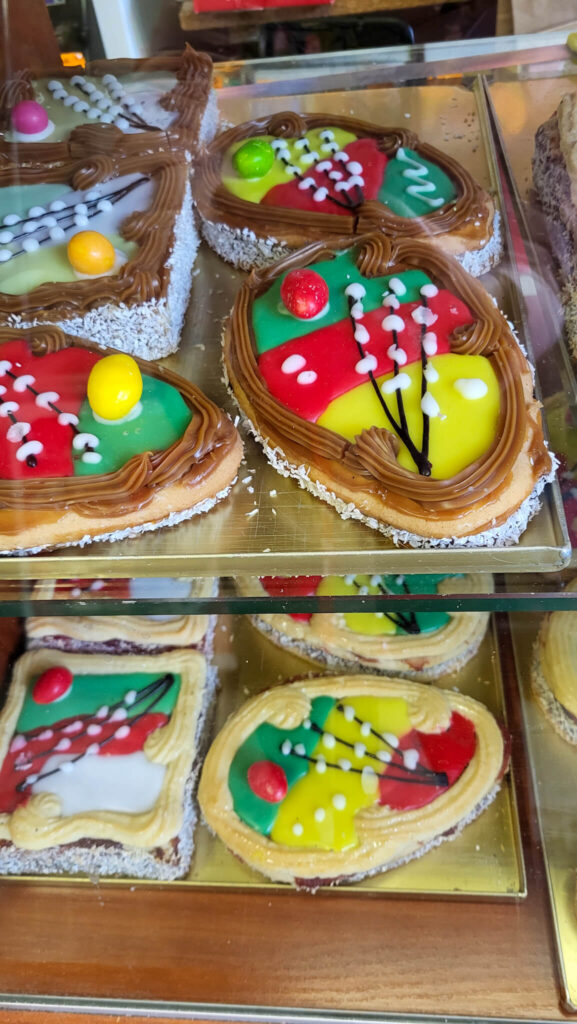
Mazurek: my favourite cake. It’s shortcrust pastry topped with caramel (kajmak) or chocolate. It’s usually decorated with nuts and raisins and writing saying Happy Easter, or something similar.
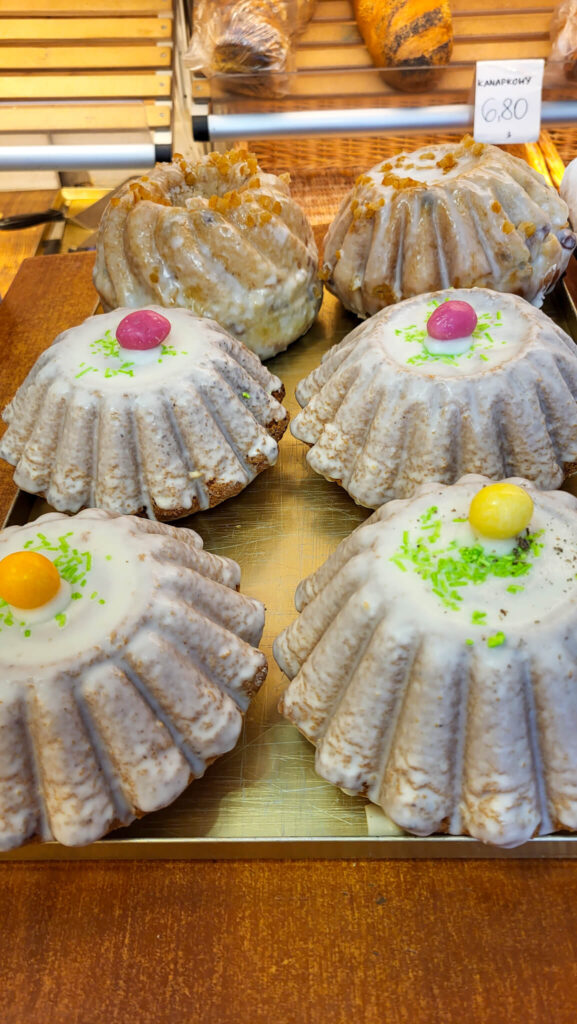
Babka: We have two different types of babka. One is yeast cake, the second pondcake, or sandcake, which is the exact translation from Polish (babka piaskowa). There are also babkas in a very mini size, which can be put to the Easter basket.
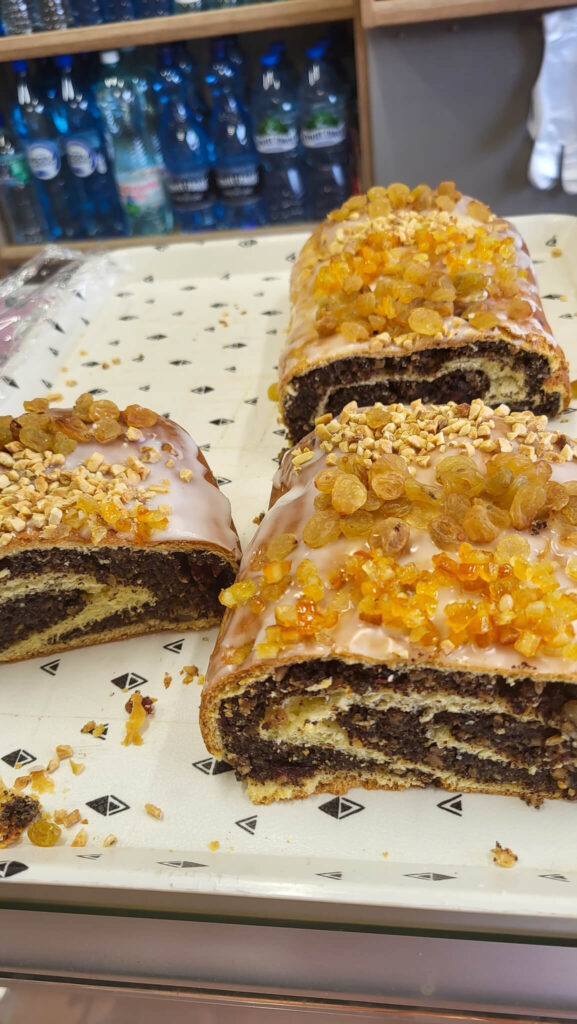
Poppy seed cake: eaten both during Easter and Christmas
Pascha: more dessert than cake, made from twaróg (cottage cheese). A bit more known in eastern regions of Poland.
As you see, there is a lot of food for this relatively short time. But food is always a very important part of celebrations in Poland.
If you are interested in Polish traditions, here you can check the Christmas ones.
Here you will read more tips regarding your trip to Poland.
